Stone Project
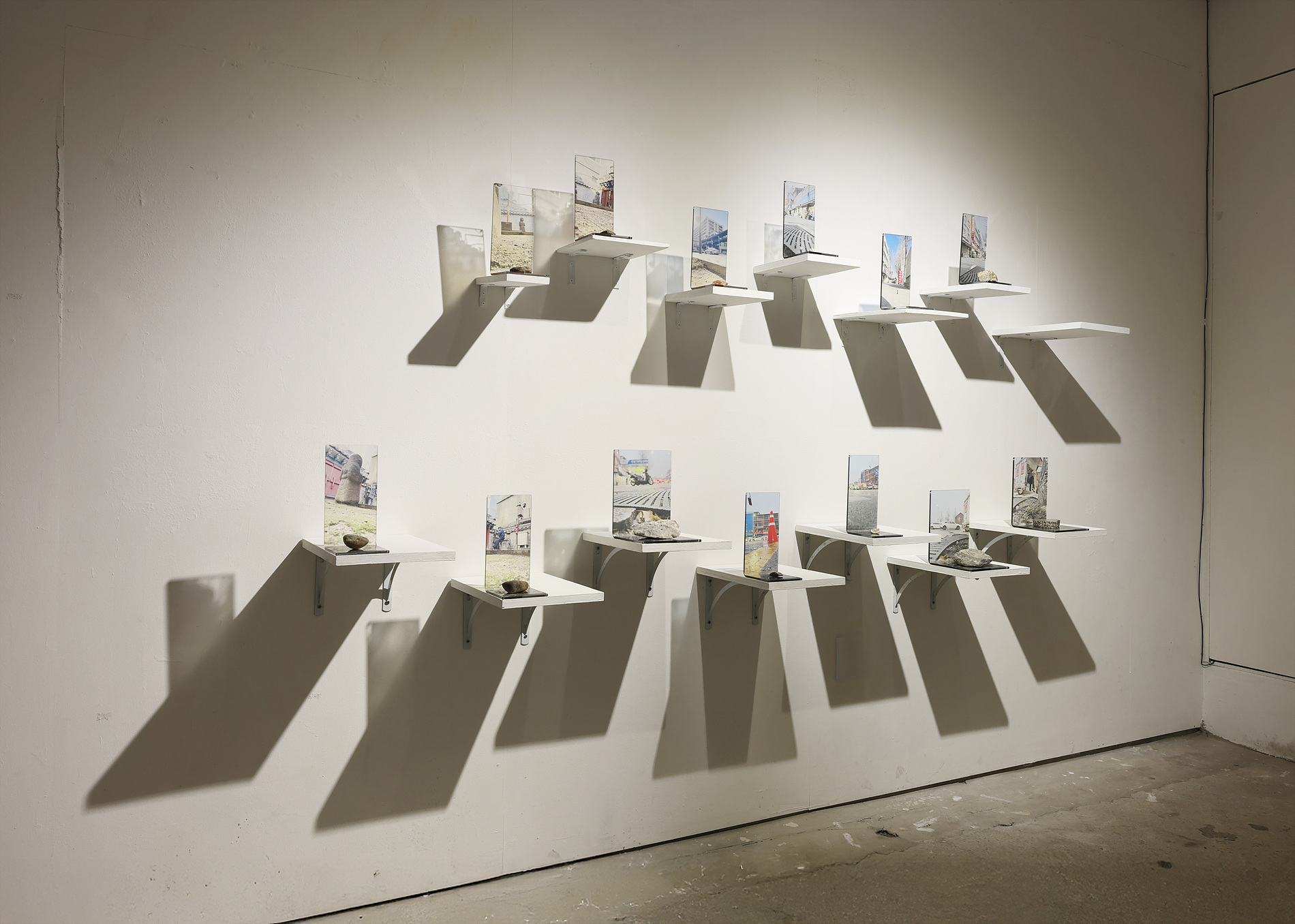
<어디서 굴러먹던 돌멩이- 을지로>
I meet with stone – Euljiro
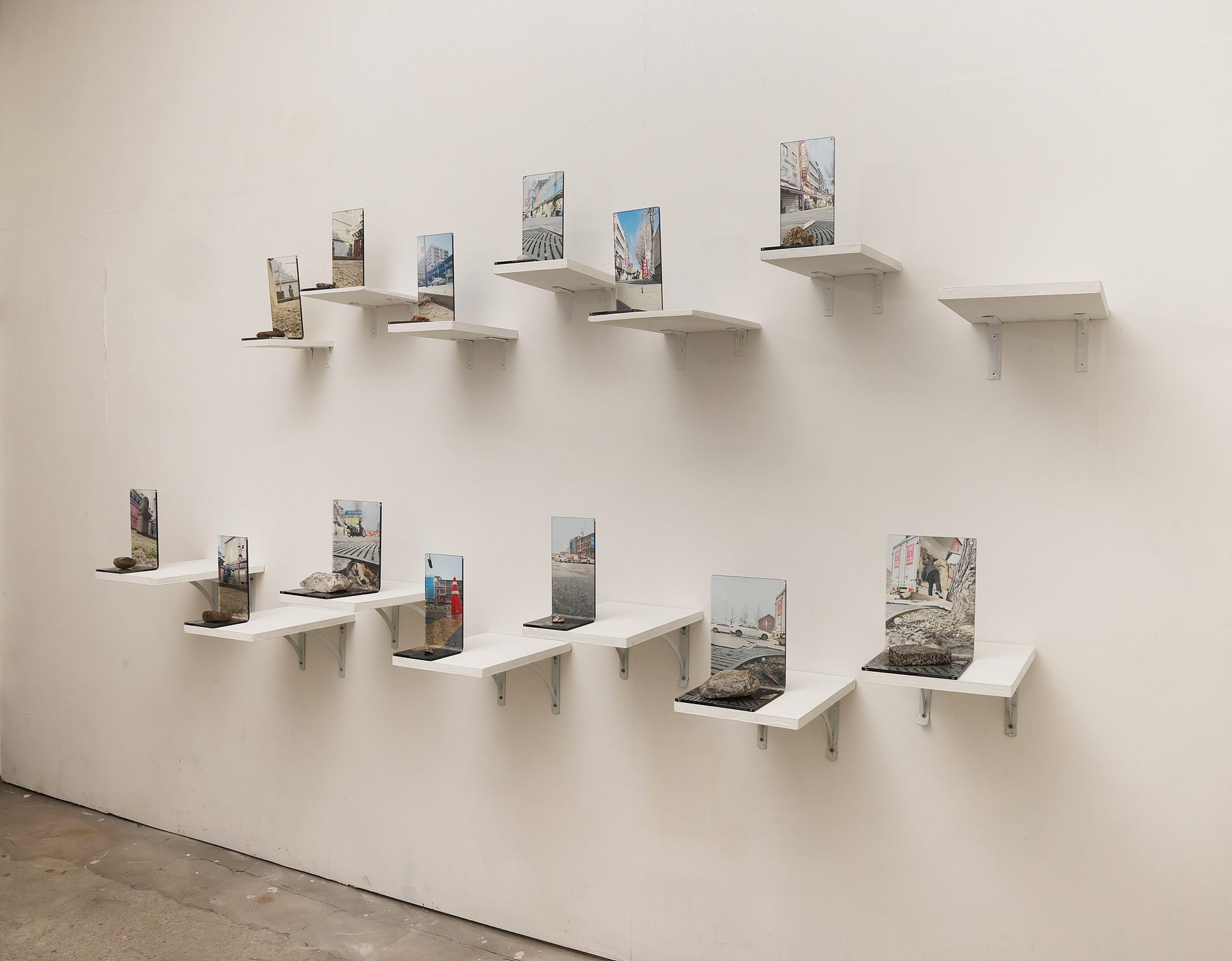
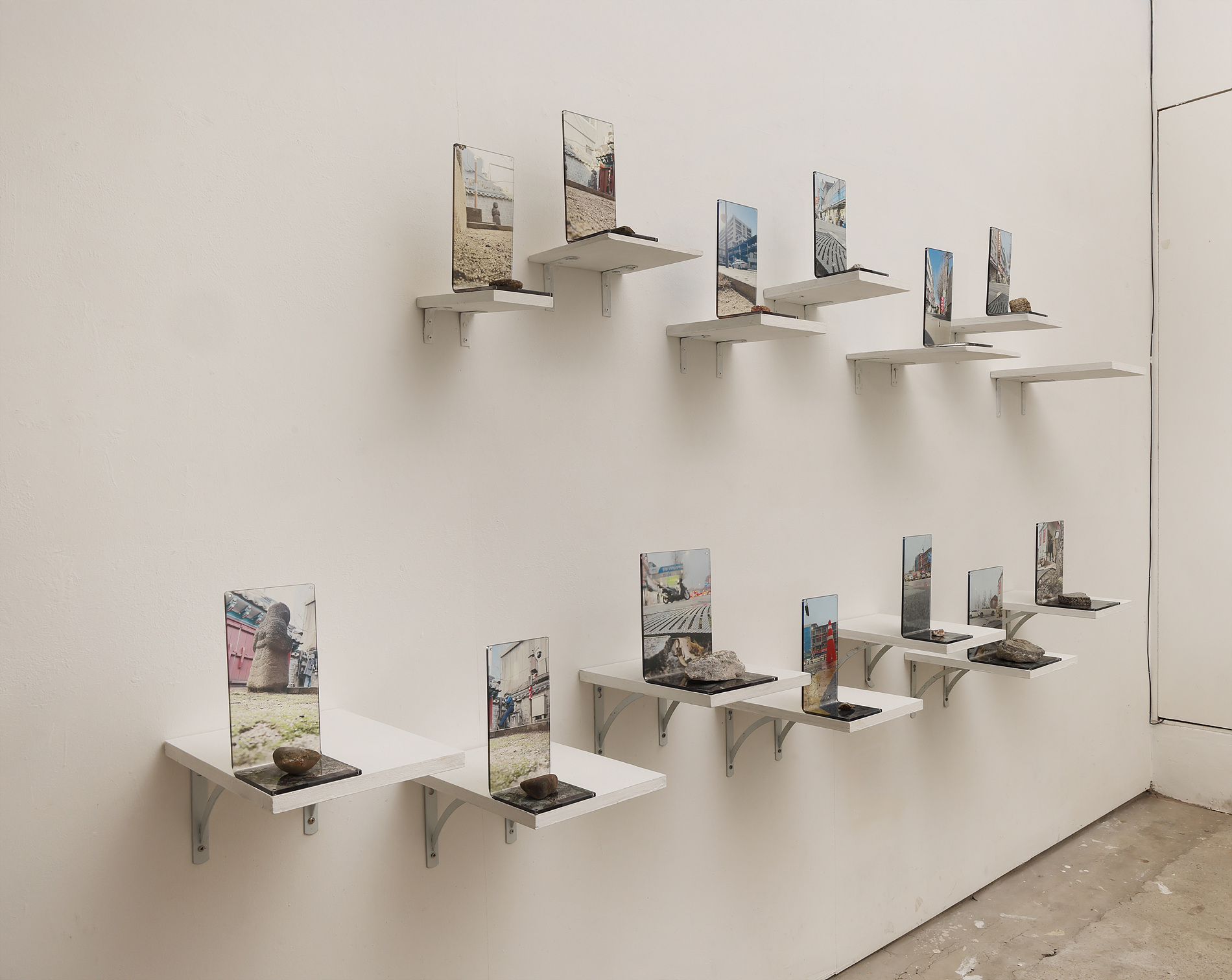
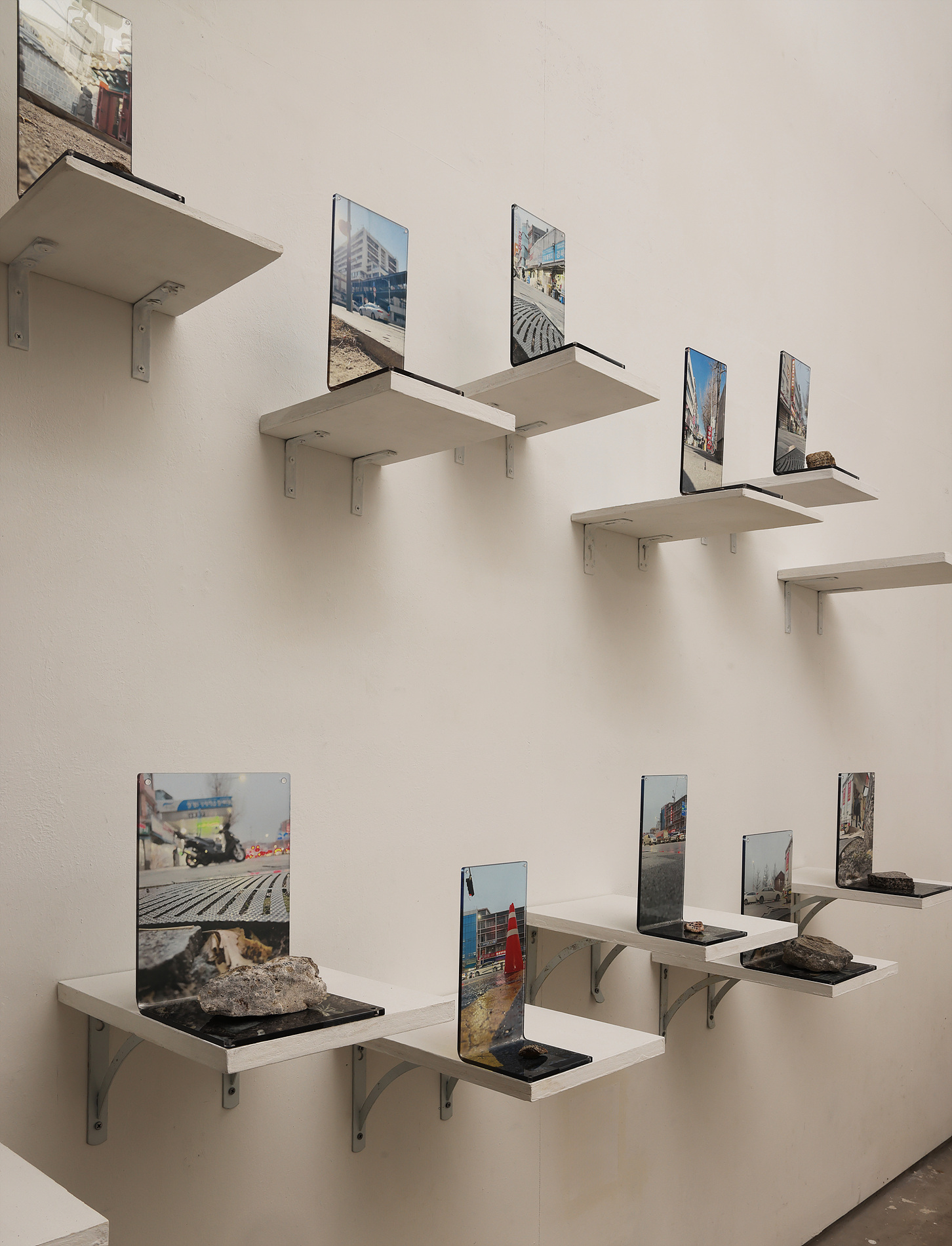
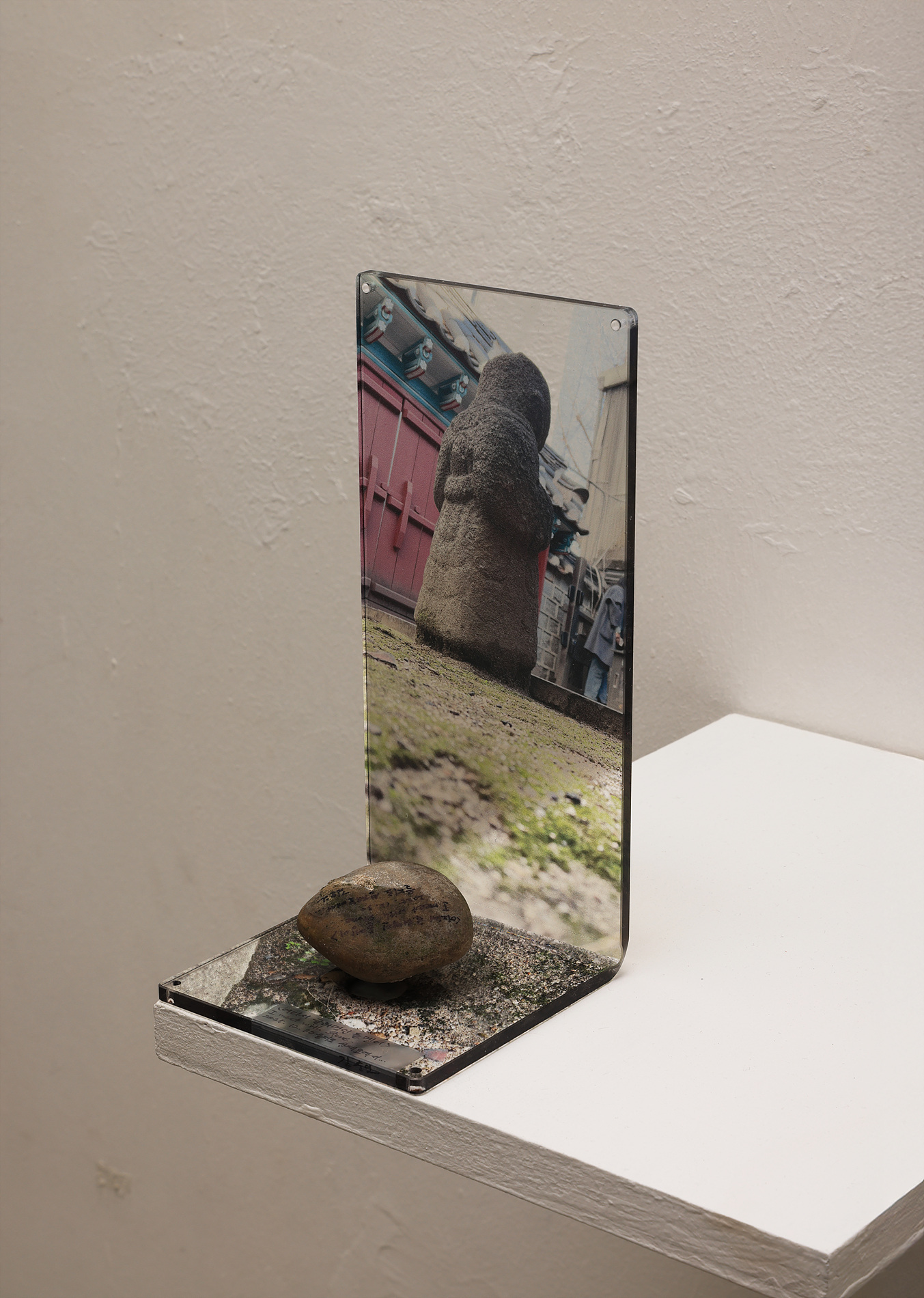
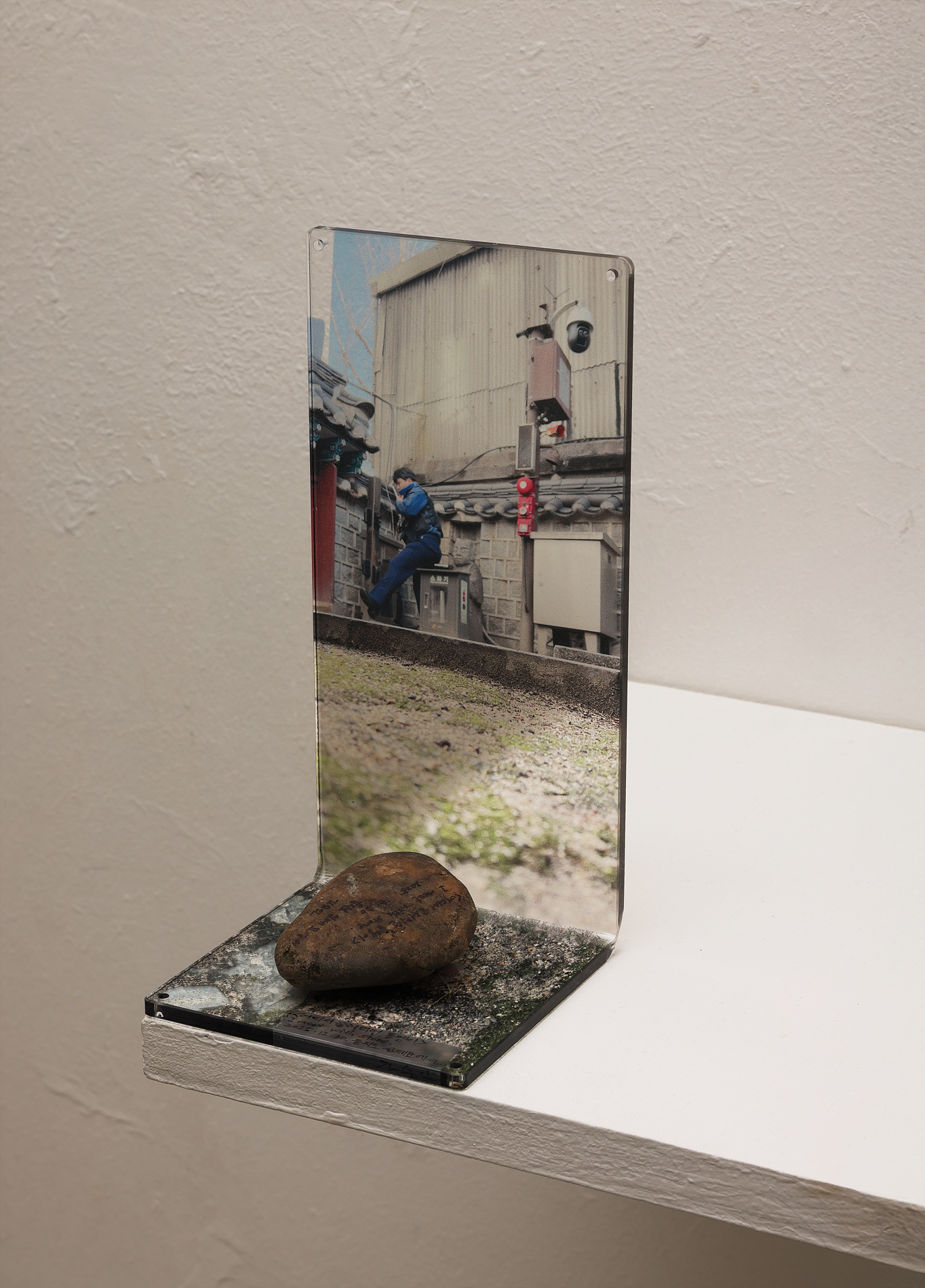
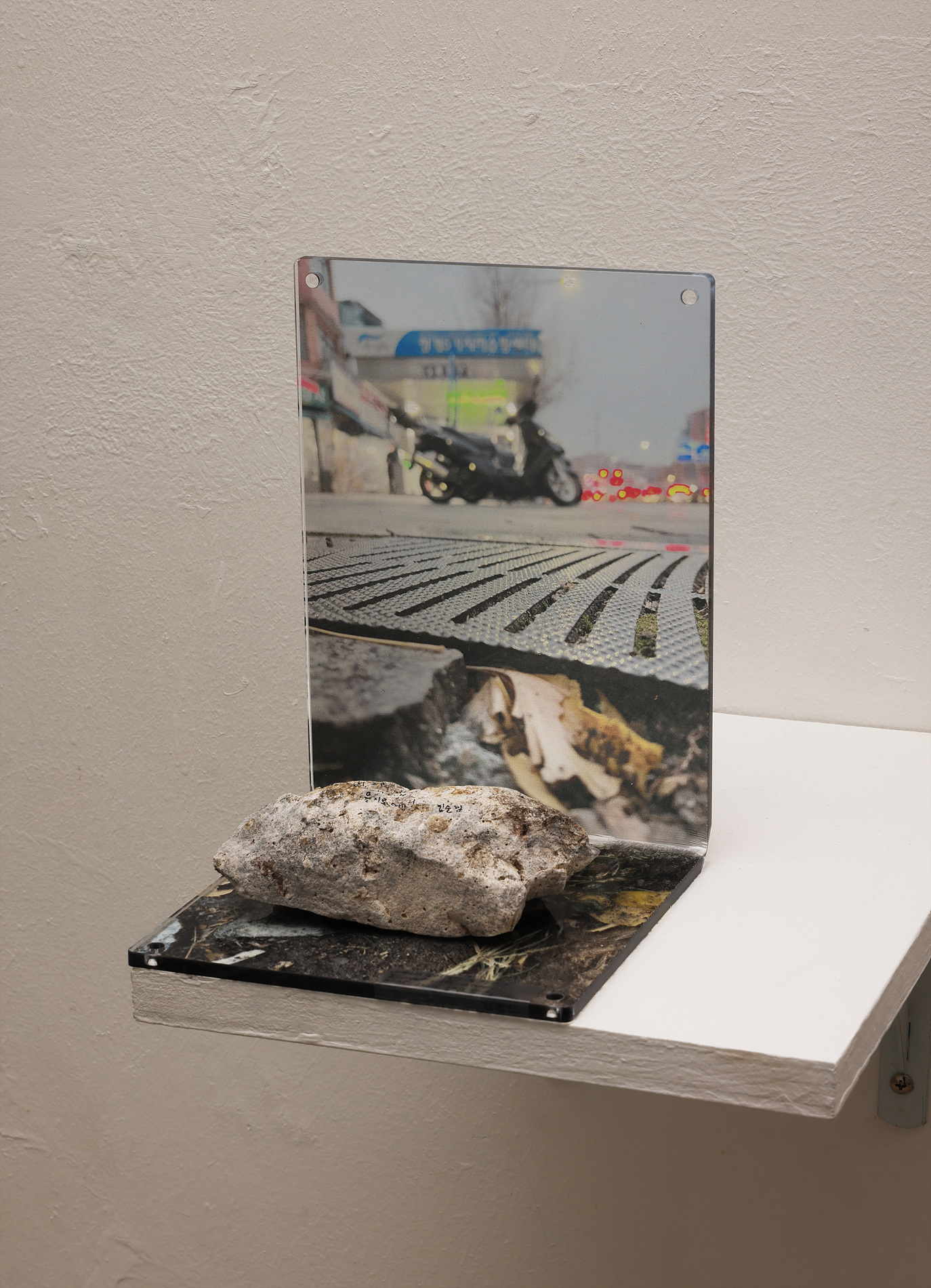
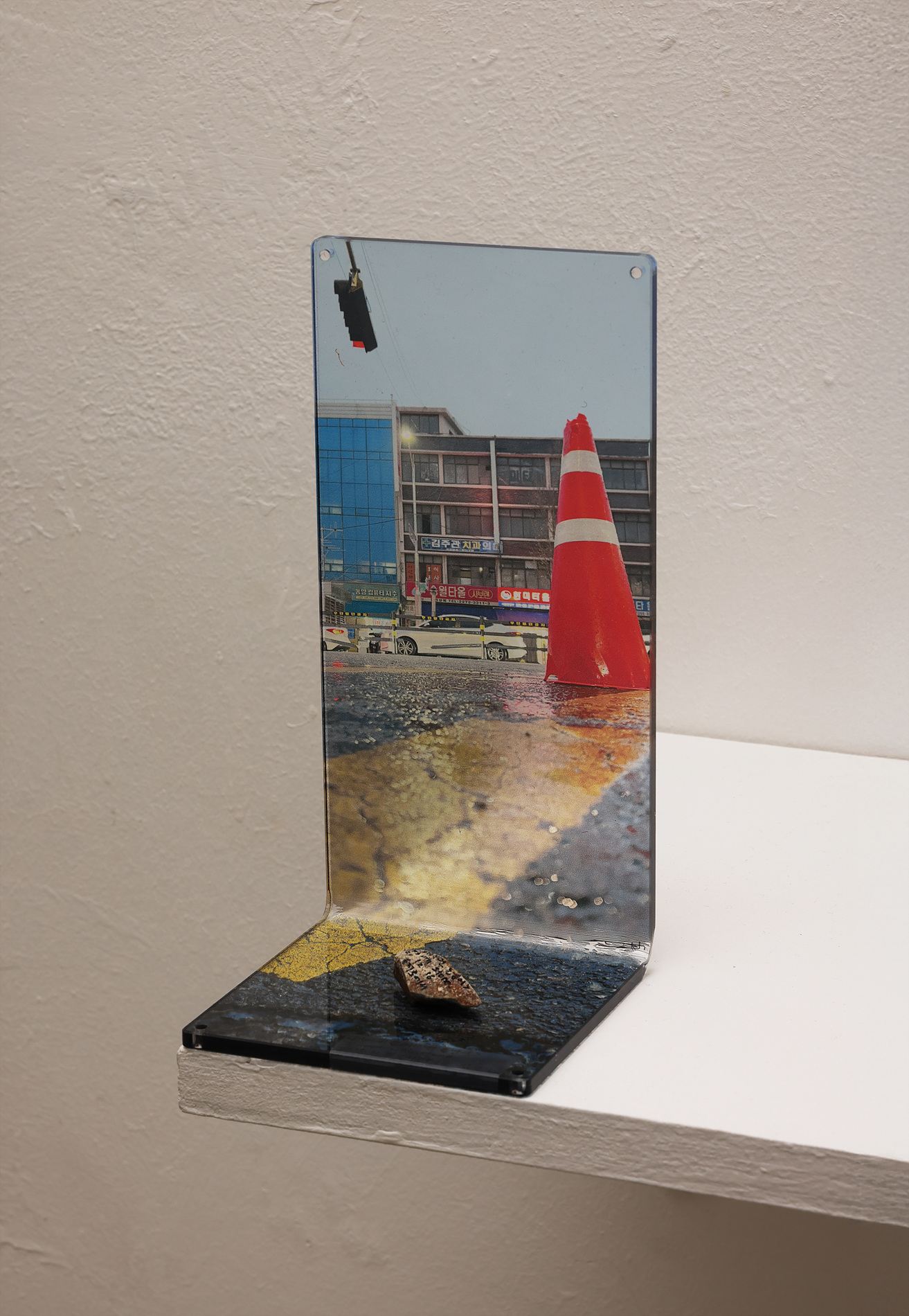
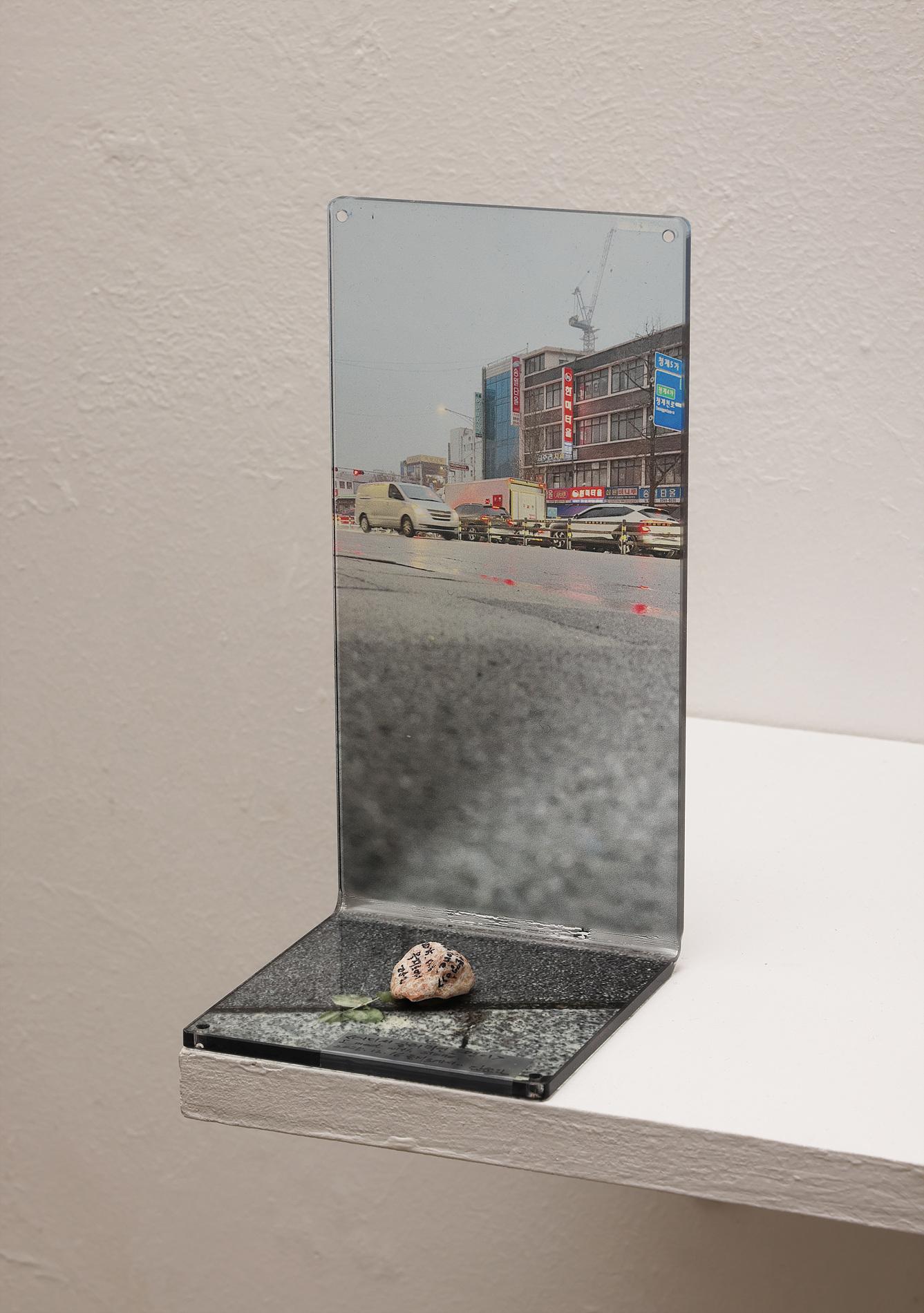
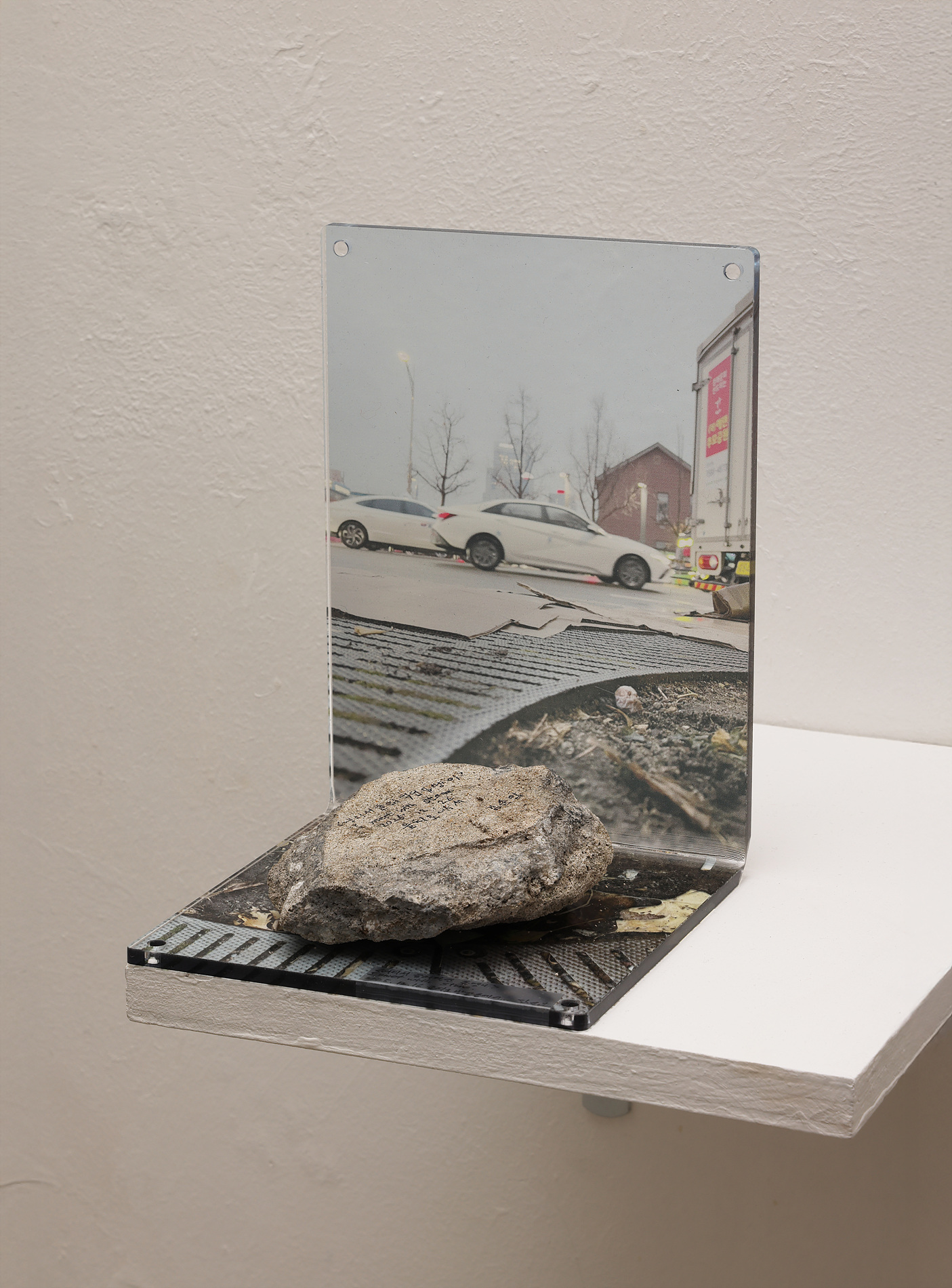
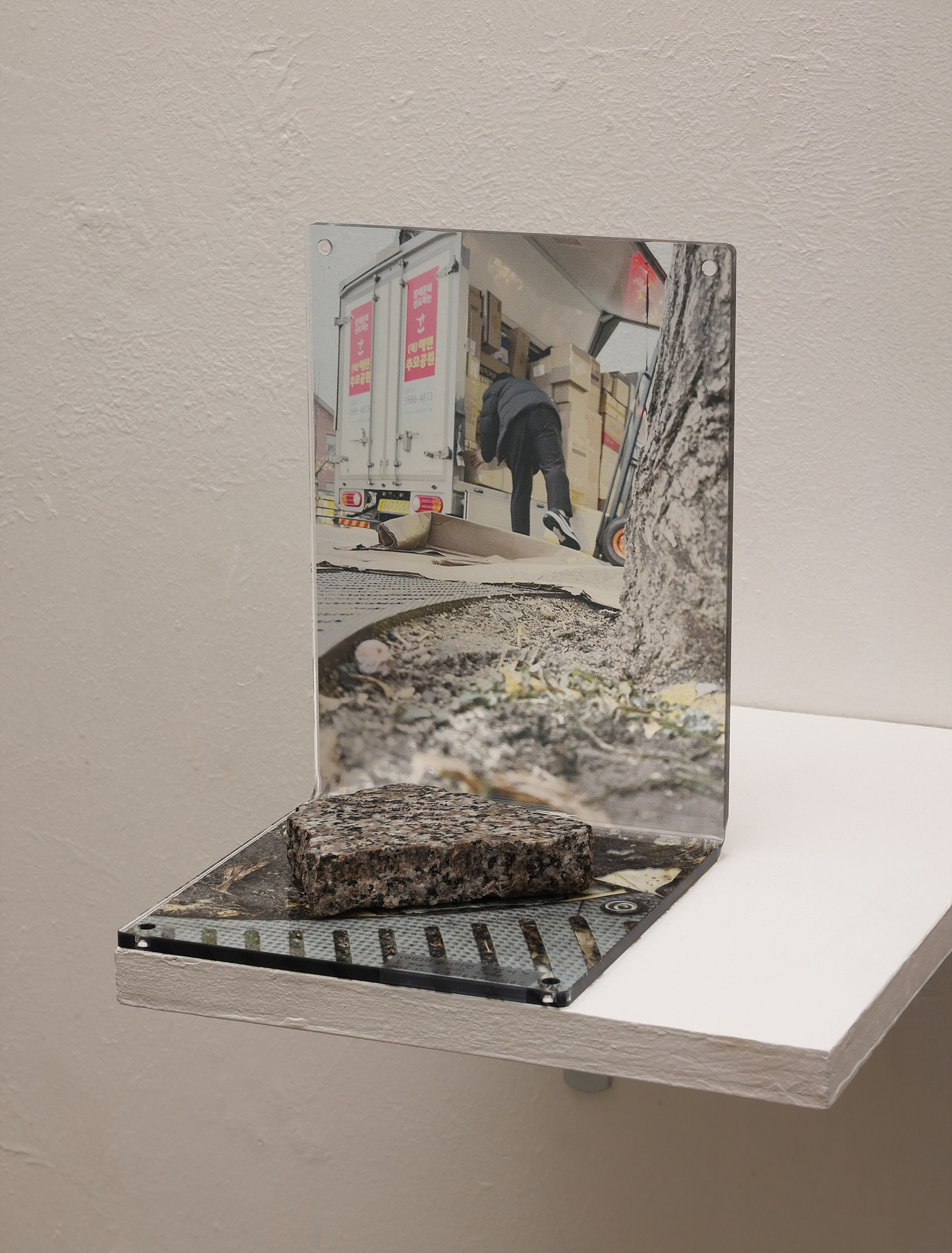
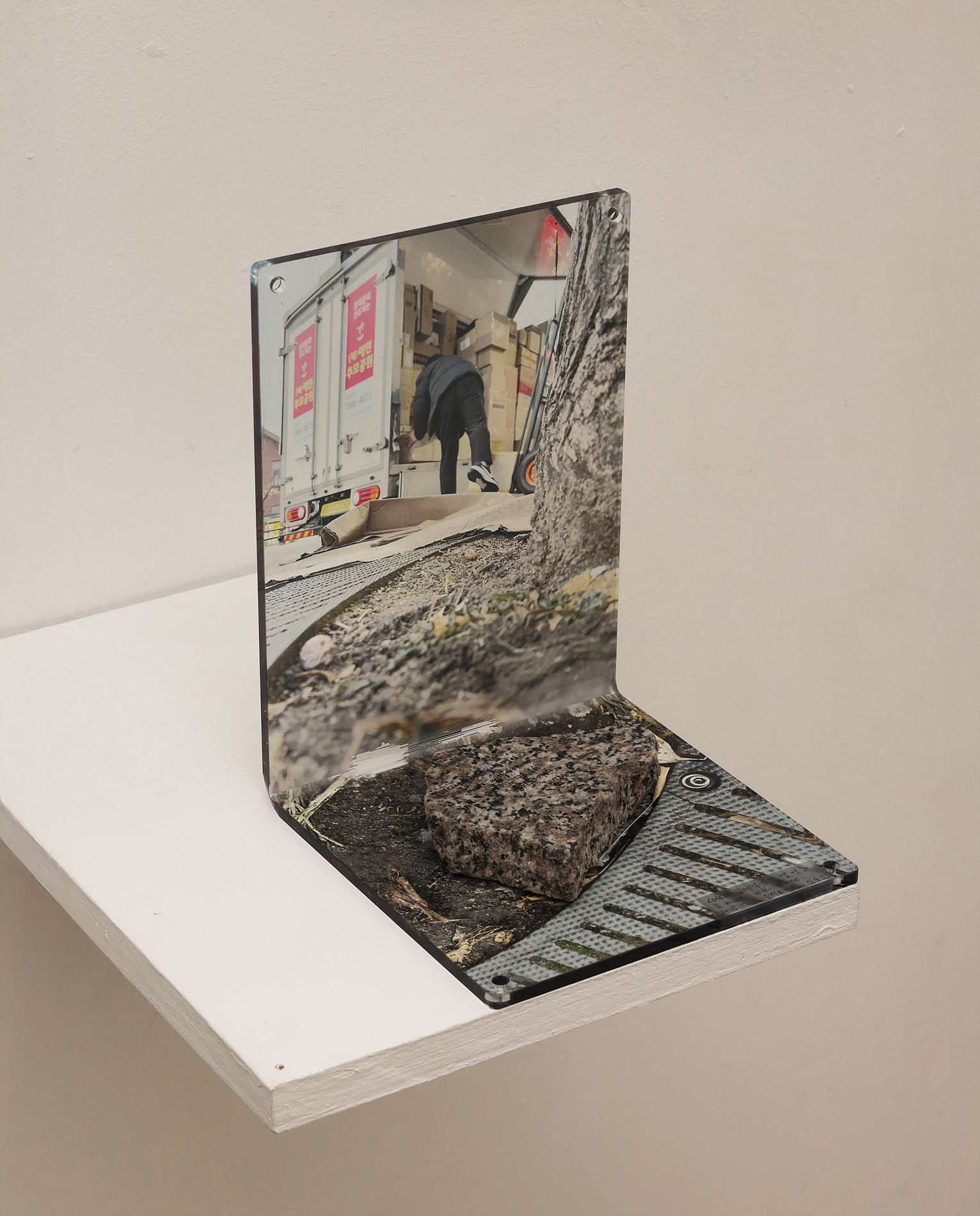
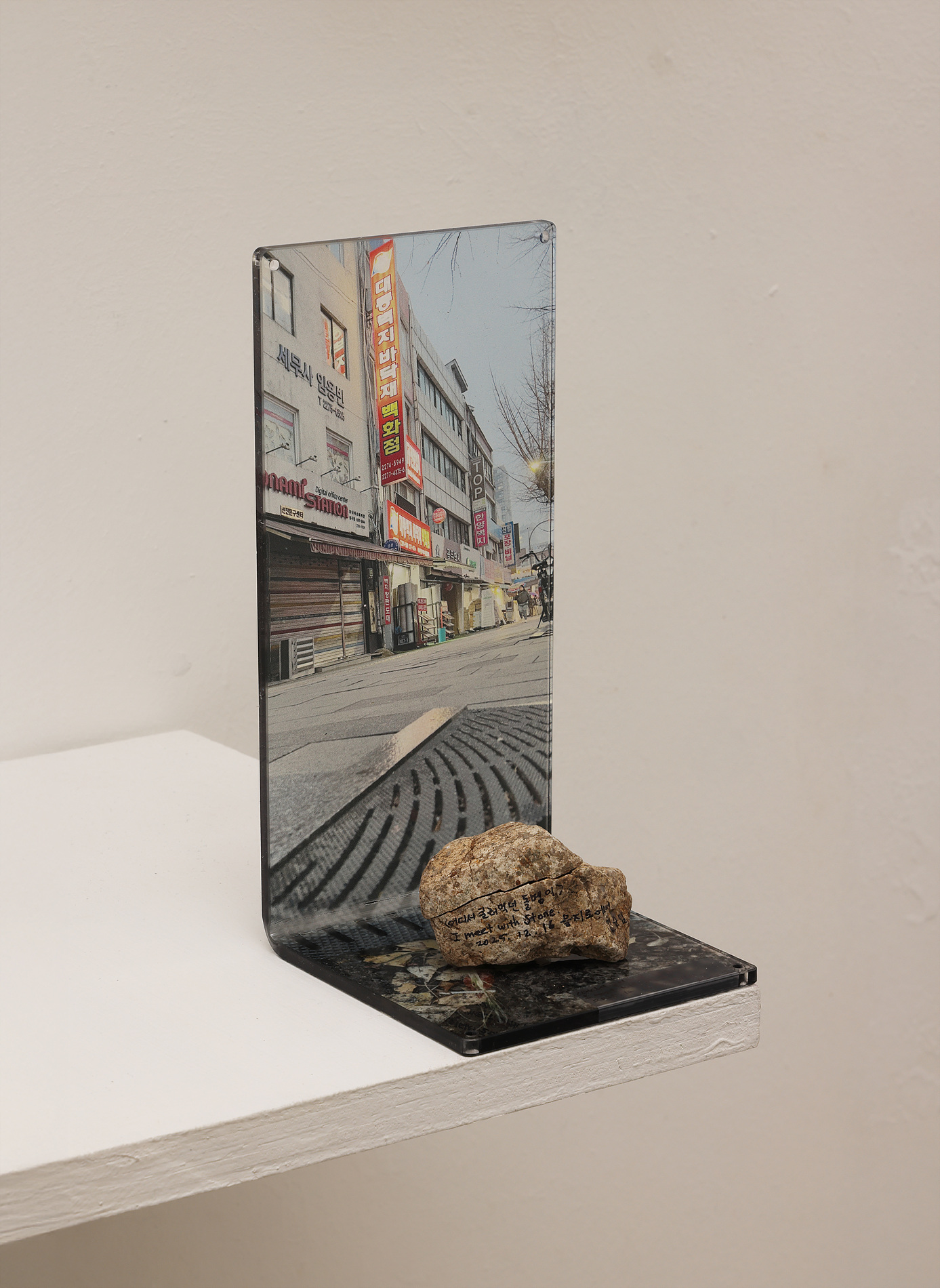
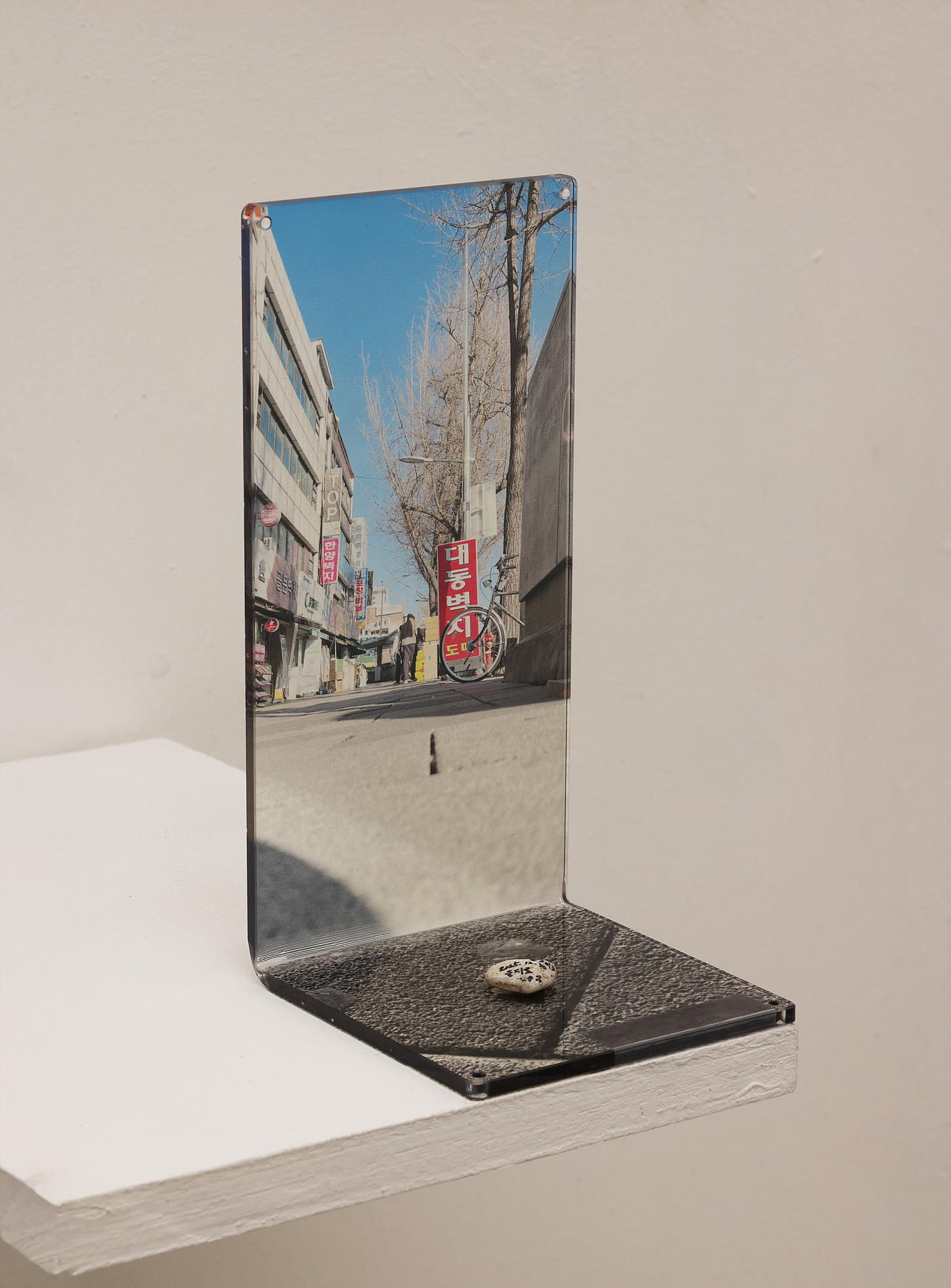
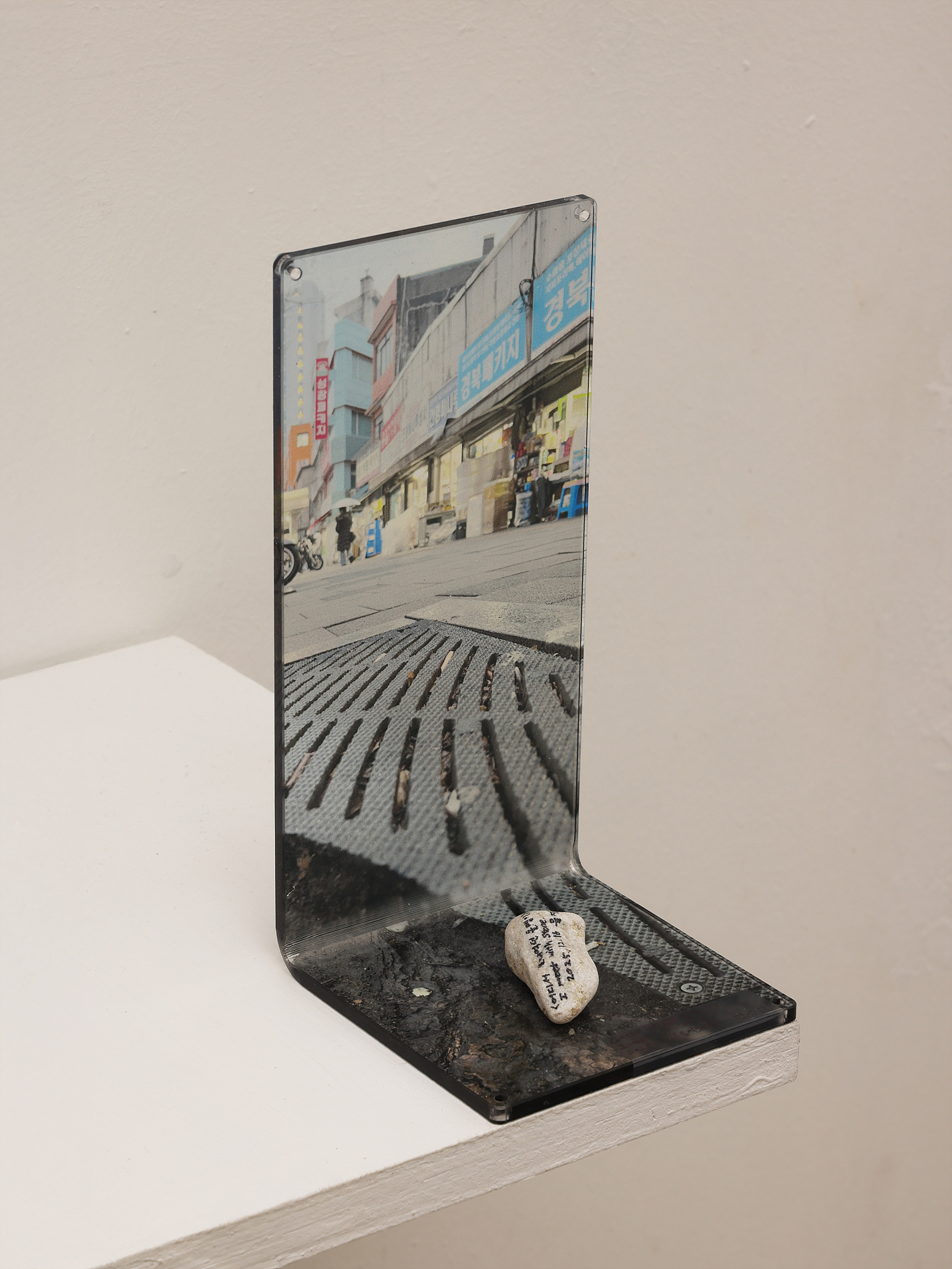
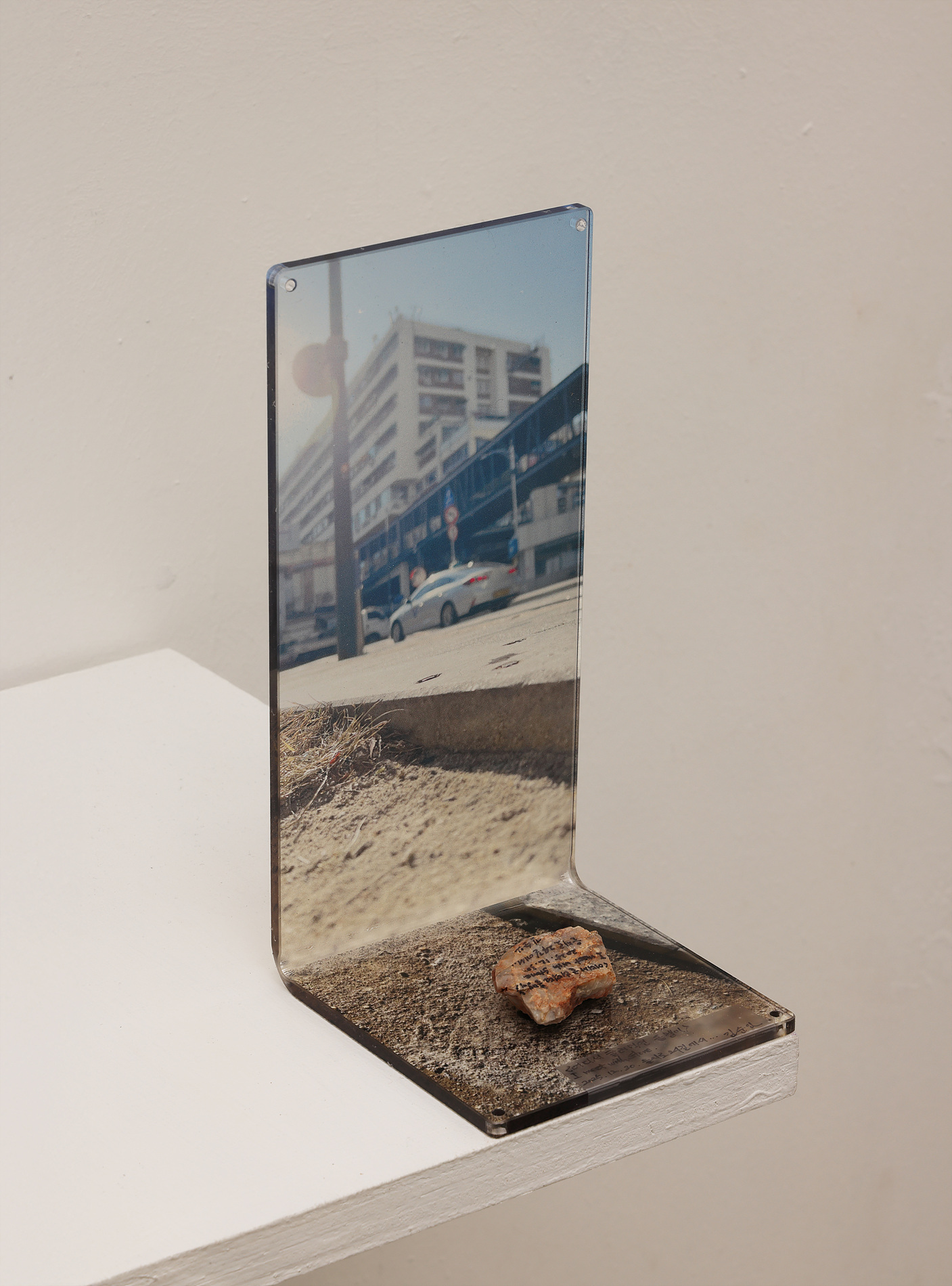
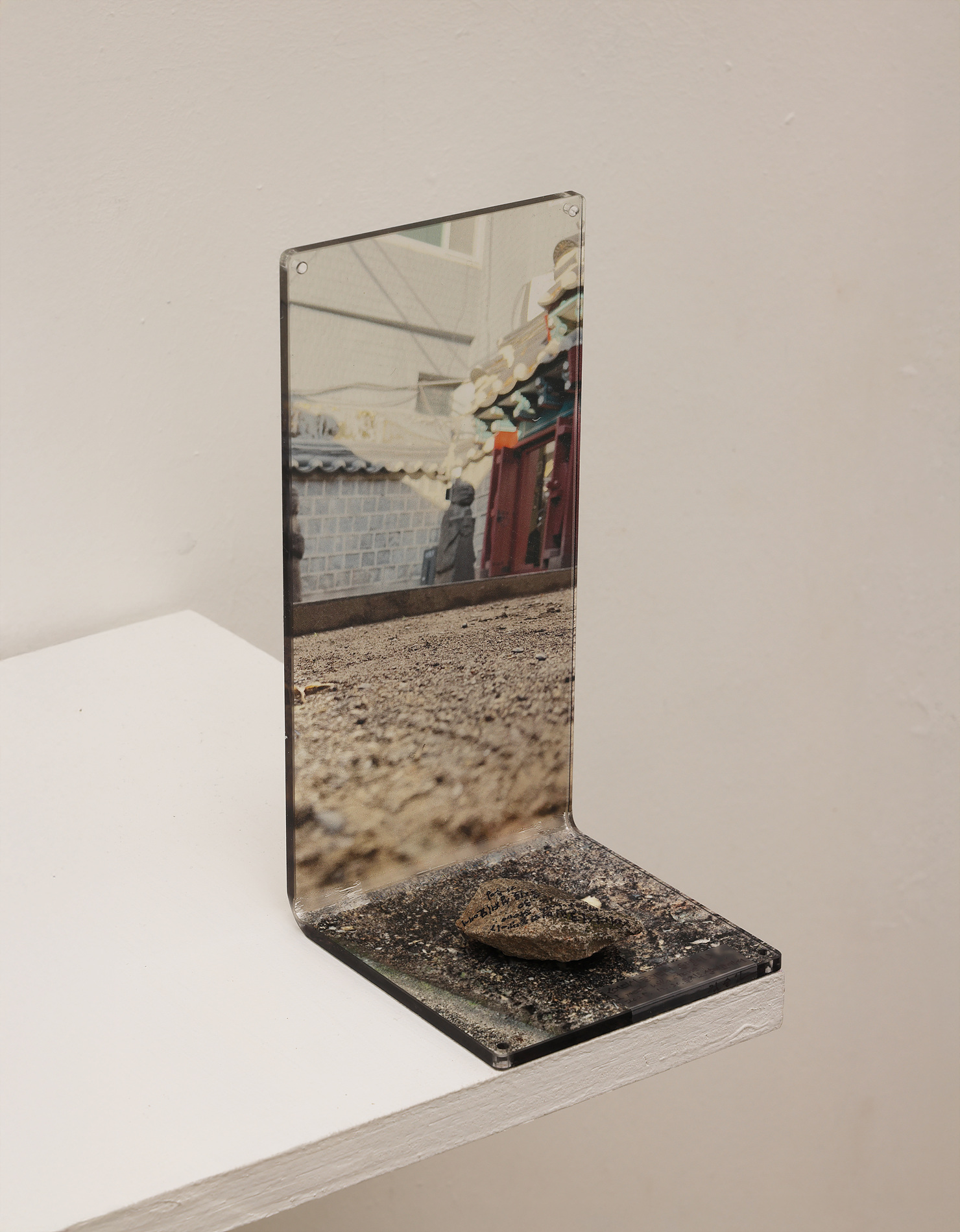
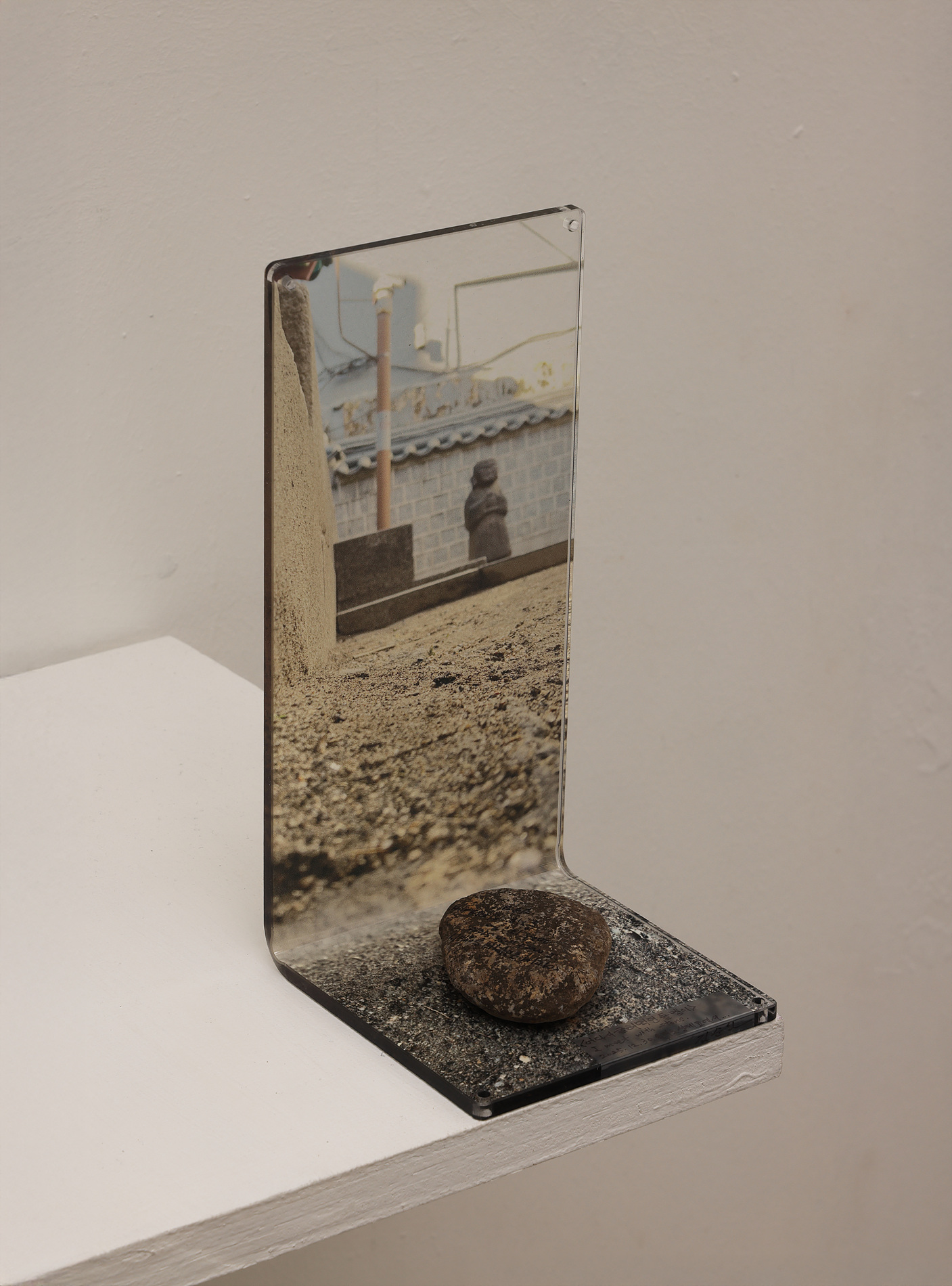
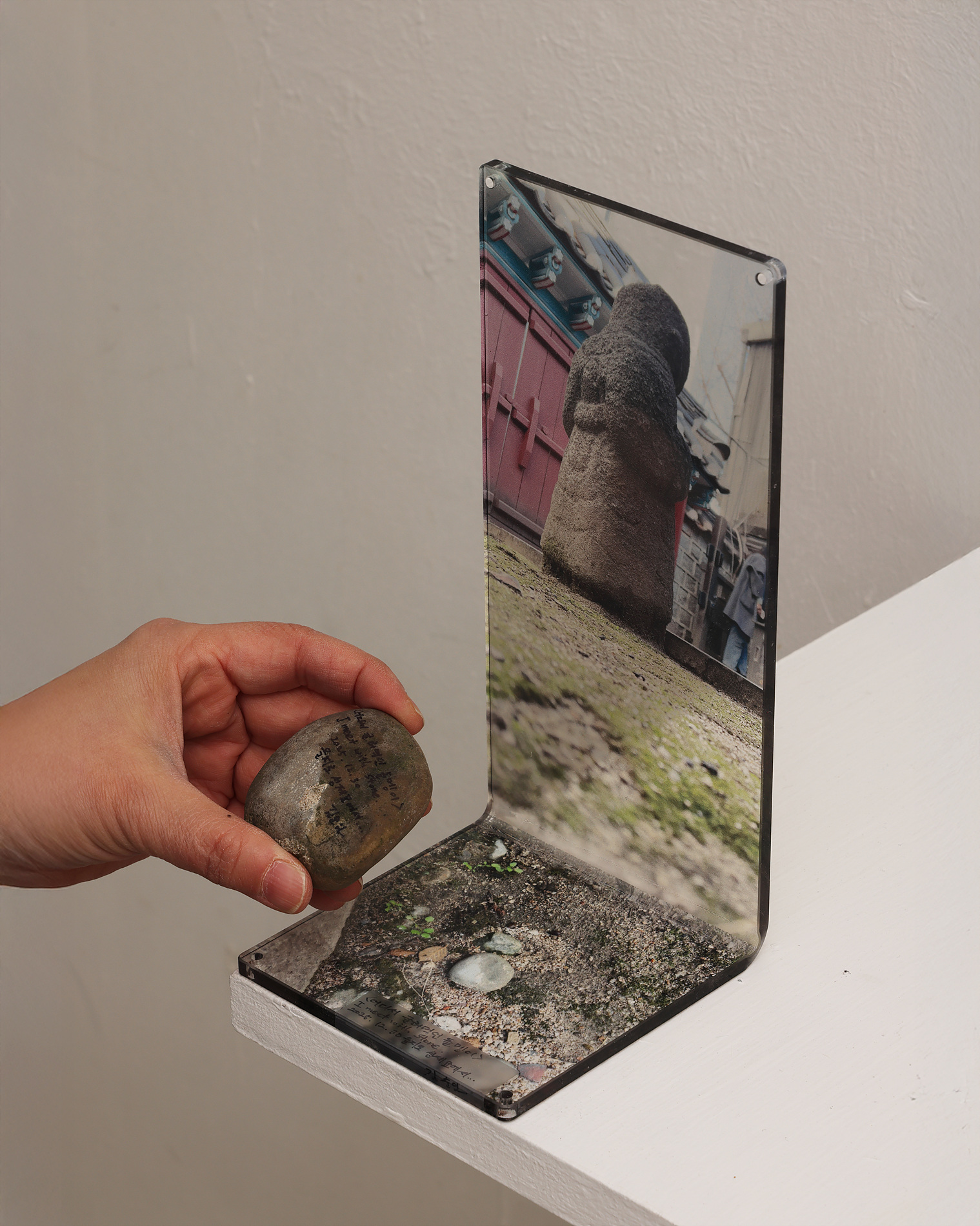
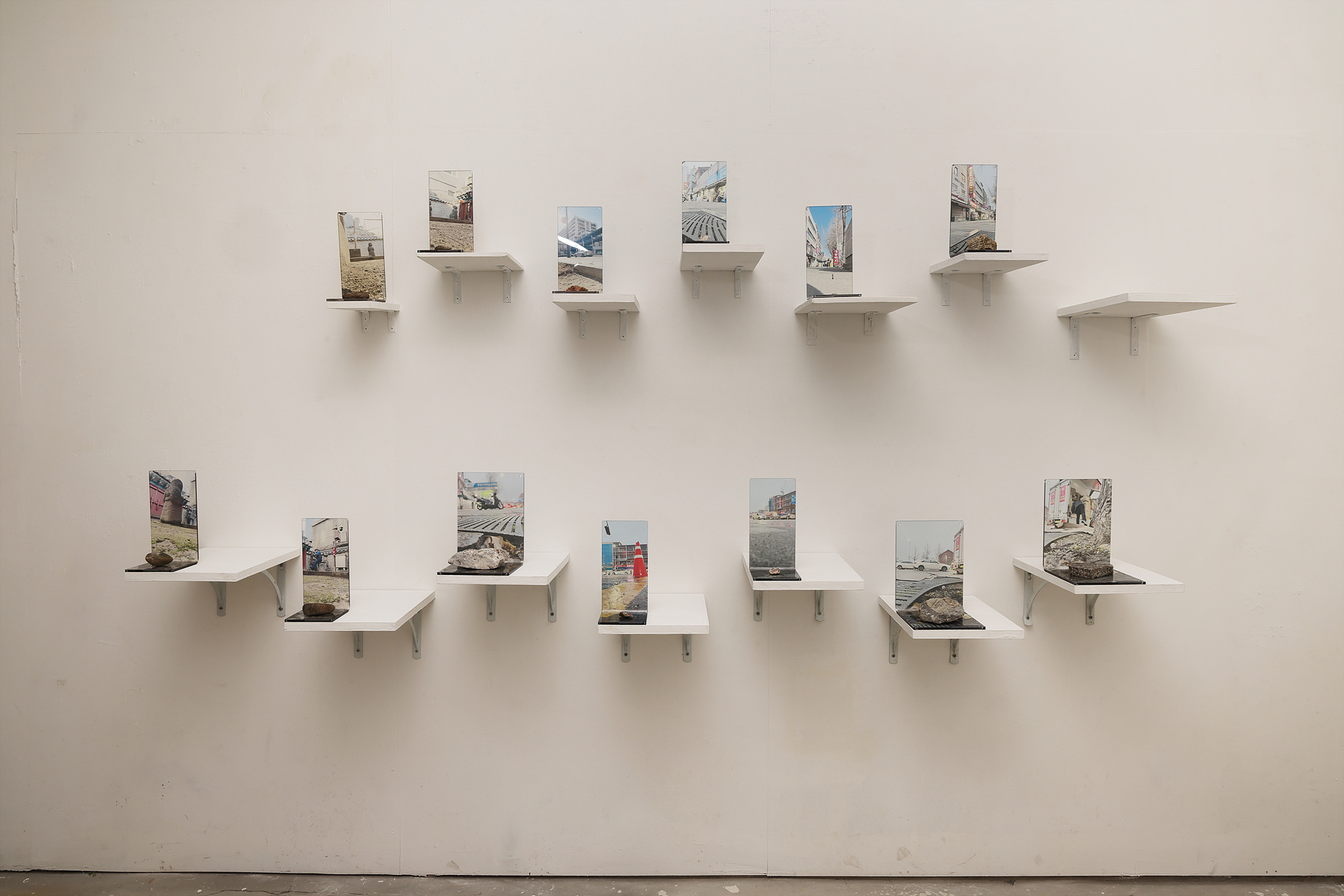
을지로의 돌멩이, 투명아크릴에 UV프린트, 가변설치, 2026
구르는 돌멩이는 땅바닥에 붙어 변화하는 을지로를 바라보고 있다.
내가 돌멩이를 만나고, 돌멩이가 보고 있을 것 같은 낮은 풍경을 만나고, 작가를 만난 돌멩이가 전시장으로 구르고, 사람들을 만나면, 을지로의 시간이 흐른다.
대학을 다니면서 처음 을지로를 만났다. 좁은 골목, 작지만 전문적인 상점들이 빽빽이 들어차 있고, 작품을 상상하고, 구체화하기위한 기술과 재료를 을지로를 서성거리며 배웠다. 을지로를 구르던 내가 기억하는 을지로는 손기술 좋은 사람들과, 작업재료로 사용하기 좋은 버려져 쌓여 있는 재료들, 무엇에 쓰는 물건인지 궁금하게 하는 재료들, 일상을 분해하여 인식하게 만드는 다양하고 풍성한 재료와 기법의 천국이었다. 목적을 가지고 왕래하던 을지로를 멈춰 들여다보니, 생명체처럼 살아 움직이고 변화하더라.
내가 기억하는 을지로는 이제 없고, 을지로는 계속 변화하고 변화할 예정이더라.
도시의 돌멩이.
어떤 건물의 일부였다가 떨어져 나와 길 위를 구르는 이, 조경을 위해 장식했다가 누군가 발로 차 길로 굴러간 이, 100년도 안되는 인간보다 더 오래 을지로에서 터잡고 있다가, 어느 날 공사로 파여진 땅에서 올라온 이, 큰 돌이 깨지며 떨어져 나간 이, 콘크리트 벽의 일부였다가 부서진 이, 이들은 길 위의 돌멩이다.
땅바닥을 구르는 돌멩이는 땅바닥에 착 붙어 변화하는 을지로를 바라보고 있다.
을지로를 걷다가 을지로의 돌멩이를 만난다. 이 돌멩이가 보고 있는 풍경은 무엇일까?
내가 돌멩이를 만나고, 돌멩이가 보고 있을 것 같은 풍경을 만나고, 기록하여 전시장으로 가져오면,
돌멩이는 전시장으로 구르고, 기록된 풍경도 전시장으로 흐르면,
을지로의 시간이 흐르며 을지로는 변화한다.
을지로의 어떤 시간과 공간을 바닥을 구르는 돌멩이의 시각으로 들여다 본다.
20260105
The rolling stone clings to the ground, gazing at the changing Eulji-ro.
(Eulji-ro is street name in Seoul South Korea)
When I meet the stone, When I meet the low-lying landscape that the stone seems to be watching, when the stone meets the artist, rolls into the exhibition hall, and when it meets people, the time of Euljiro flows to people.
I first encountered Euljiro while attending University. It was a place packed with narrow alleys and small yet specialized shops; I wandered through Euljiro, learning the techniques and materials needed to imagine and materialize my artwork. The Euljiro I remember from my days of frequenting it was a paradise of skilled artisans, piles of discarded materials perfect for work, objects that made me wonder what they were used for, and a diverse and abundant array of materials and techniques that compelled me to dissect and perceive everyday life. When I finally stopped to look closely at Euljiro, a place I had previously visited with a specific purpose, I saw that it was alive, moving, and changing like a living organism.
The Euljiro I remember is gone now, and it turns out Euljiro continues to change and is set to continue changing.
Stones of the City.
Stones that were once part of buildings but have fallen and are now rolling on the streets; stones for landscaping but have been flung onto the pavement by someone and have reappeared from the ground dug up by construction; stones that fell as large rocks broke; stones that were once part of concrete walls but have been shattered into pieces. These are the stones of the streets. They are stones that have settled and lived in Euljiro for a longer time than a human life of less that 100 years.
The stone rolling on the ground is stuck to the ground, watching the changing Euljiro.
Walking through Euljiro, I come across a stone. What landscape is this stone gazing at?
I encounter a stone, encounter the landscape that the stone seems to be watching, record it, and bring it to the exhibition hall,
When stones roll into the exhibition hall, and recorded landscapes also flow into the exhibition hall,
As time flows in Euljiro, Euljiro keep changes.
I look into a certain time and space of Euljiro from the perspective of a stone rolling on the ground.
20260105 artist note